Cloudflare Wants Email to Be a Native Interface for Agents
Cloudflare has pushed its Email Service into public beta, but the bigger story is not just about sending mail.
It is about turning email into a built-in way for AI agents to communicate.
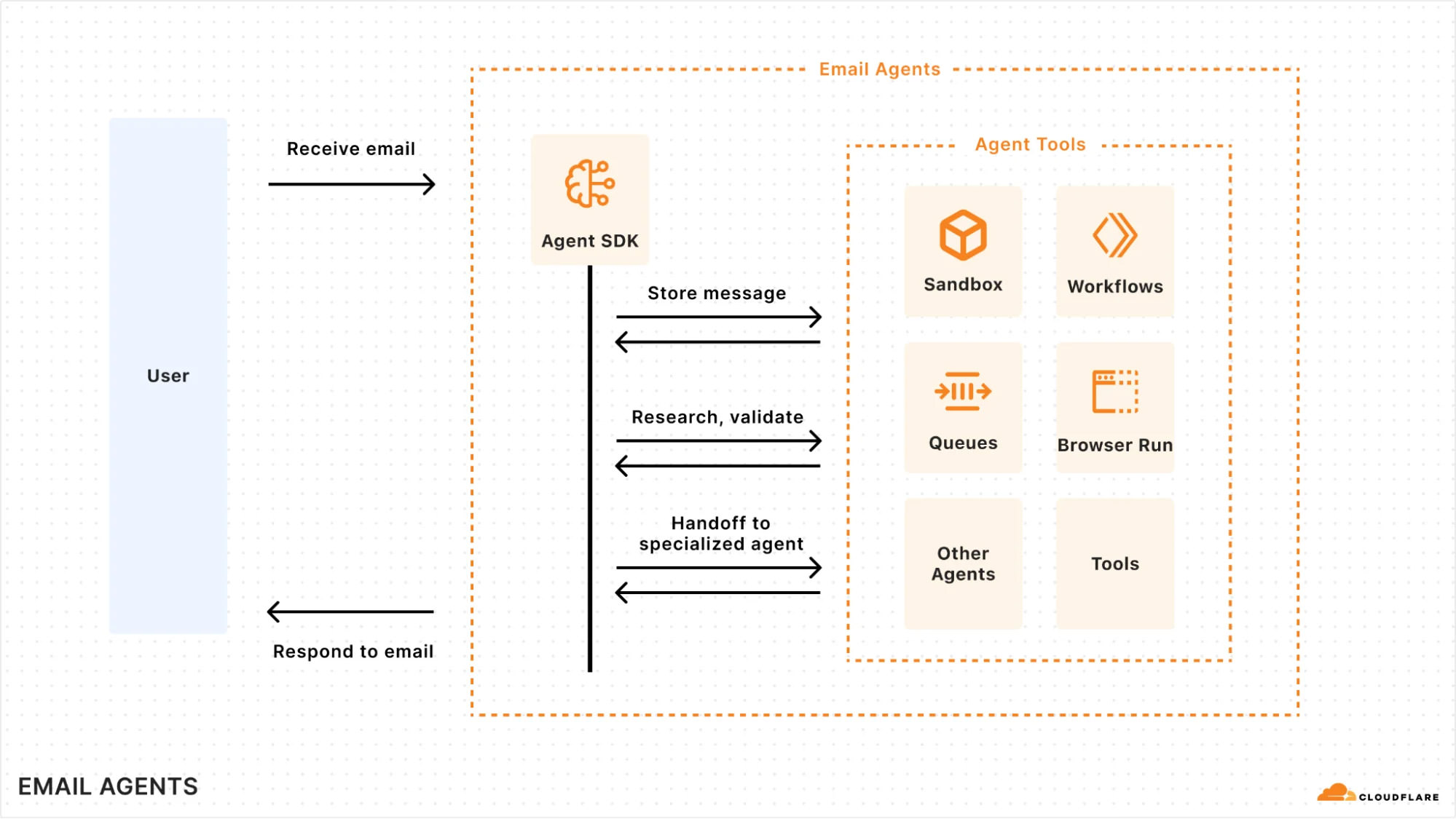
Email is still one of the few tools almost everyone already uses. There is no new app to install, no special client to learn, and no new habit to build. If an agent can work through email, it fits into the way people and businesses already operate.
What Cloudflare Actually Announced
The main update is simple. Cloudflare Email Service now supports sending email in public beta. Cloudflare already supported receiving and routing incoming email before this.
Put together, Cloudflare now has a full two-way email setup:
- receive email with Email Routing
- process it with Workers or the Agents SDK
- send replies or updates with Email Sending
In plain terms, developers can now build apps or agents that read incoming email, do some work, and send a response back.
That opens the door to support agents, approval workflows, account verification systems, document processing tools, and other automations that need to work through an inbox.
Why Email Works Well for Agents
A normal chatbot is usually expected to answer right away. An agent does not always work like that. It may need time to check another system, wait for a task to finish, or gather more information before replying.
Email already fits that kind of work.
Someone sends a message. The system picks it up. It might reply in five seconds, or it might reply an hour later. Then it comes back with an answer, an update, or a request for more information.
That is already how many real-world tasks work, especially in support, approvals, billing, and operations.
So this is less about making email feel modern and more about using a communication channel that already works well for delayed responses.
The Useful Part Is the Infrastructure
The flashy version of this launch is “email for agents.”
The more useful version is that Cloudflare is also handling a lot of the messy setup behind the scenes.
Email Sending works through a native Workers binding, and Cloudflare says it automatically handles SPF, DKIM, and DMARC when you add your domain. Most novice users do not need to know every detail here. The short version is simple: these settings help email get delivered properly and make messages look more trustworthy.
Email gets complicated fast once deliverability becomes part of the job.
- Agents SDK gets a more complete email workflow
- MCP server support lets external agents discover and use email features
- Wrangler CLI commands let agents work with email without loading huge tool definitions
- Cloudflare skills give coding agents setup and usage instructions
- Agentic Inbox, an open-source reference app, shows what an email-based agent setup can look like
That broader stack is the real story. Cloudflare is not just adding another API. It is trying to make email a built-in part of its wider platform for agent development.
What This Lets Developers Build
The Agents SDK side is probably the part developers should watch most closely.
Cloudflare already had an onEmail hook for handling incoming mail, but sending replies from the same flow was more limited before. With Email Sending added, an agent can now receive an email, remember context, do longer background work, and reply later.
That means developers can build agents that:
- accept support requests by email
- process invoices or documents sent to an inbox
- verify accounts or handle approval chains
- trigger multi-agent workflows from incoming messages
- send follow-ups after background tasks finish
Cloudflare also uses Durable Objects here, which means an agent can keep track of state across multiple messages. In simpler terms, the agent can remember where a conversation or workflow left off.
That is much more useful than a basic bot that only reacts to one message at a time.
The Security Detail Also Counts
One interesting detail in Cloudflare’s post is secure reply routing.
Cloudflare says agents can sign routing headers with HMAC-SHA256 so replies go back to the correct agent instance. That may sound technical, but the idea is simple. It helps make sure replies end up in the right place and are harder to spoof or misroute.
A lot of AI agent tools look good in demos, then get messy once messages start moving across real systems and real users.
So it is good to see Cloudflare treating reply routing as core infrastructure instead of tacking it on later.
MCP and Wrangler Make This Easier to Use
Cloudflare is also exposing Email Service through its MCP server and Wrangler CLI.
For developers, that means agents can work with email in a more practical way. Instead of wiring everything from scratch, they can use existing tools to discover commands and run tasks when needed.
The Wrangler part is especially practical. It gives agents a lighter way to work without stuffing lots of instructions into context all at once. If you need a quick primer on Model Context Protocol, this setup makes more sense once you see how MCP lets agents discover tools on demand.
Cloudflare’s approach also lines up with the broader rise of MCP servers as a cleaner way to connect AI tools to real development workflows.
For most readers, the main takeaway is simple. Cloudflare is trying to make this usable in real development workflows, not just polished demos.
Agentic Inbox May Be the Most Practical Release
Cloudflare is also open-sourcing Agentic Inbox, a reference app for building an email client with agent automation built in.
For many developers, this may be the most useful part of the launch.
Instead of starting from zero, they get a working example with conversation threading, email rendering, attachments, automatic replies, and an MCP server for review workflows. In other words, it gives developers something real they can study, test, and possibly fork.
Reference apps often reveal more than product announcements. They show what a company expects people to build.
In this case, Cloudflare seems to believe the inbox could become an important place for agent workflows.
For the original release details, see the Agentic Inbox repository.